
Torrential rain that began on Tuesday and peaked on Wednesday, October 14, 2026, caused the worst Istanbul floods in decades, swamping homes, roads and underpasses across Türkiye's largest city. On Thursday the Istanbul Governor's Office reported three deaths and four people missing. Schools are closed on Thursday and Friday, motorcycles are banned from traffic, and Governor Davut Gül has said the rain could continue for another two to three days.
This page brings together what has been confirmed so far and what it means for visitors: flights, traffic, personal safety and getting to and from the airports. Figures were checked against official statements and major news outlets on Thursday, October 15, and they may still change.
What happened in the Istanbul floods on October 14?
An intense, long-lasting downpour overwhelmed drainage on both sides of the city, flooding streets, underpasses, basements and shops from Esenyurt in the west to Beykoz in the east. Between 06:00 and 20:00 on Wednesday, the AFAD disaster agency and the 112 emergency line received 2,518 calls. The governor's records list 1,277 floods, 15 landslides, 47 people stranded, 13 fallen trees and two roofs torn off, with reports involving 808 homes, 280 businesses and 76 vehicles.
Sections of road collapsed in Eyüpsultan and Gaziosmanpaşa. The Kağıthane Stream burst its banks and flooded the historic Sadabad Mosque, and water entered two hospitals, including Şişli Hamidiye Etfal in Sarıyer's Çayırbaşı area. Interior Minister Mustafa Çiftçi said more than 2,700 stranded people were evacuated. Around 8,000 personnel and 2,000 vehicles and machines were deployed under AFAD coordination.
Casualties confirmed so far
Officials have confirmed three deaths. A 14-year-old boy died after an electric shock when he stepped into a puddle in Çukurbostan Park in Balat, in the Fatih district; an investigation is under way and the source of the current has not been officially determined. A 34-year-old man slipped while crossing a flooded street in Sarıyer's Ayazağa neighbourhood, hit his head on the kerb and later died in hospital. A third body was found near Sadabad Park in Kağıthane; local media say the man went missing in Sarıyer and may have been carried there by floodwater, and his identity is still being confirmed. Some outlets still report two deaths because the cause of the Kağıthane death had not been confirmed at first.
How much rain fell in Istanbul?
In the worst-hit areas, more than 240 mm of rain fell. That is over four times what Istanbul normally receives in the whole of October, which averages around 50 mm. Note that 1 kg per square metre, the unit Turkish authorities use, equals 1 mm of rain.
Published totals differ because they come from different station networks and time windows:
Governor's Office (06:00 to 20:00 Wednesday): Beykoz-Ömerli 193.84 mm, Arnavutköy 125.9 mm, Sarıyer-İTÜ Maslak 124.72 mm, Çatalca 75.2 mm, Kartal 14.3 mm, Bakırköy 6.8 mm.
Istanbul Metropolitan Municipality (AKOM): 242 mm in Beykoz, with later reports of 255.8 mm, plus roughly 190 mm in both Eyüpsultan and Sarıyer. The municipality said some areas saw their heaviest rain since 1985.
Governor Davut Gül (Thursday): 261 mm, which he called the highest total since the state meteorological service began records in 1942.
Are Istanbul Airport and Sabiha Gökçen flights affected?
Yes. Wednesday night brought dozens of diversions, but as of Thursday morning neither airport had cancelled all flights. Further delays are still possible. The Ministry of Transport and Infrastructure said 43 aircraft could not land at Istanbul Airport (IST) and were sent elsewhere: 16 to Ankara Esenboğa, 10 to İzmir, 8 to Sabiha Gökçen, 2 each to Balıkesir and Çanakkale and 1 to Antalya, plus four abroad to Burgas, Tehran and Athens. On Thursday Governor Gül put the total at IST at 51 diversions and 19 cancellations.
At Sabiha Gökçen (SAW), strong winds and wind shear briefly stopped landings. Departures were halted at 21:42 and three inbound flights went to Ankara, before operations resumed at 22:02.
What to do: check your flight in the Turkish Airlines, AJet or Pegasus app, or on the airport's flight board, before you leave your hotel. If your inbound flight was diverted and then re-routed, send the new arrival time and airport to whoever is collecting you as soon as you have them.
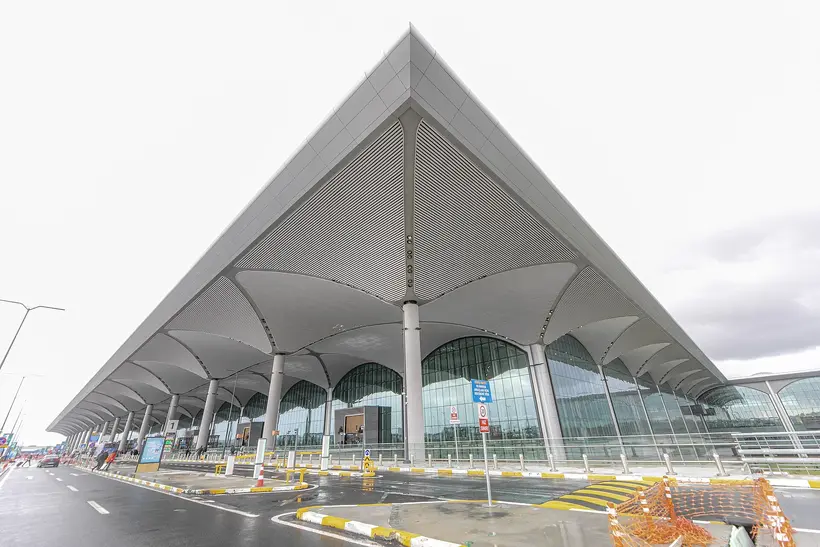
Istanbul Airport (IST) in Arnavutköy. File photo from 2019, not taken during the floods. Photo: Arne Müseler / Wikimedia Commons, CC BY-SA 4.0
What are traffic and public transport like?
Roads took the worst of the disruption. Congestion reached about 90% during Wednesday's evening rush hour as underpasses filled with water and vehicles stalled. Water collected inside the Sarıyer-Çayırbaşı tunnel, and traffic on the Şile highway near Çekmeköy was temporarily diverted onto a service road.
Rail held up better. Metro Istanbul kept 10 metro lines, 3 tram lines and 2 funicular lines running until 02:00 on Wednesday night, among them the M2 Yenikapı-Hacıosman line and the M4 Kadıköy-Sabiha Gökçen Airport line. Metrobus services ran through the night. There were problems: water poured through the ceiling at Hacıosman station, and a fault cut the M9 line short, with free buses covering the gap. By Thursday morning, normal service had returned on the T1 Kabataş-Bağcılar and T3 Kadıköy-Moda trams and on the M9. Officials are urging people to use public transport where they can.
Which official measures are in place?
Schools: in-person classes are suspended across Istanbul on Thursday 15 and Friday 16 October, and several universities have moved online.
Public sector: some groups of state employees are on administrative leave.
Travel advice: residents are asked to stay at home unless their journey is essential, and people in basement flats were told to spend the night elsewhere.
Two-wheelers: motorcycles and scooters have been banned from traffic since 21:00 on Wednesday, until further notice.
Weather warning: a yellow warning covered October 15. AKOM forecast an extra 50 to 75 mm in parts of the Asian side and the Bosphorus area by 10:00 Thursday, with winds of 50 to 80 km/h.
Shops and malls: no city-wide closure order had been issued.
Istanbul travel safety: what should tourists do now?
Most of the risk comes from water on streets, so plan your day around avoiding it. In practice:
Keep away from puddles near lamp posts, junction boxes and loose cables. The death in Balat, a neighbourhood popular with visitors, shows how dangerous this can be.
Never walk or drive through moving water. Avoid underpasses, streambeds such as the Kağıthane valley, and low-lying shore roads until the water has gone down.
Stay away from basement-level venues while warnings are active.
Wear shoes with grip. The steep cobbled lanes of Balat, Fener and Galata get slippery, and the Sarıyer death was caused by a fall.
Save 112, Türkiye's single emergency number.
Check before you set out: phone or check online before visiting a museum or restaurant, and keep receipts if your plans change, in case you make an insurance claim.
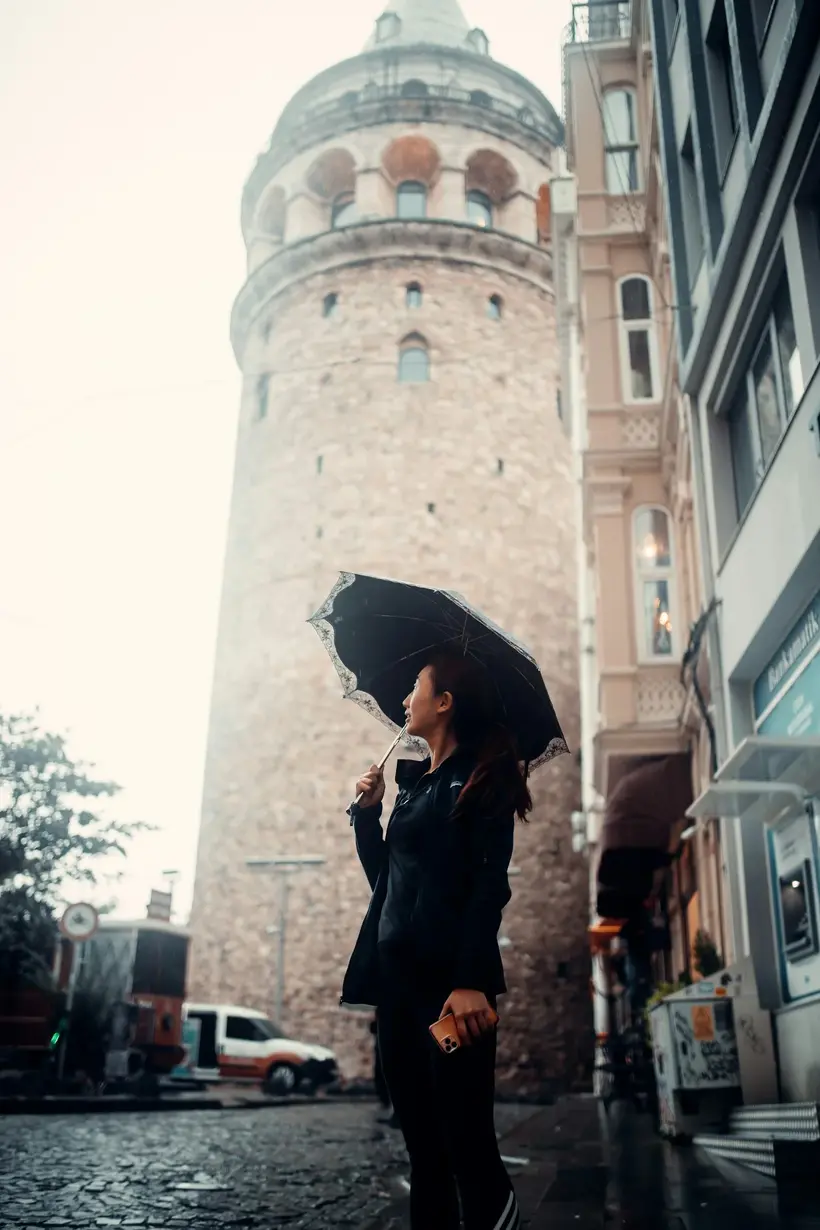
Rain on the street near Galata Tower in Beyoğlu, where steep cobbled lanes turn slippery in a downpour. File photo, not from the October 2026 floods. Photo: Ahmet Kahveci / Unsplash
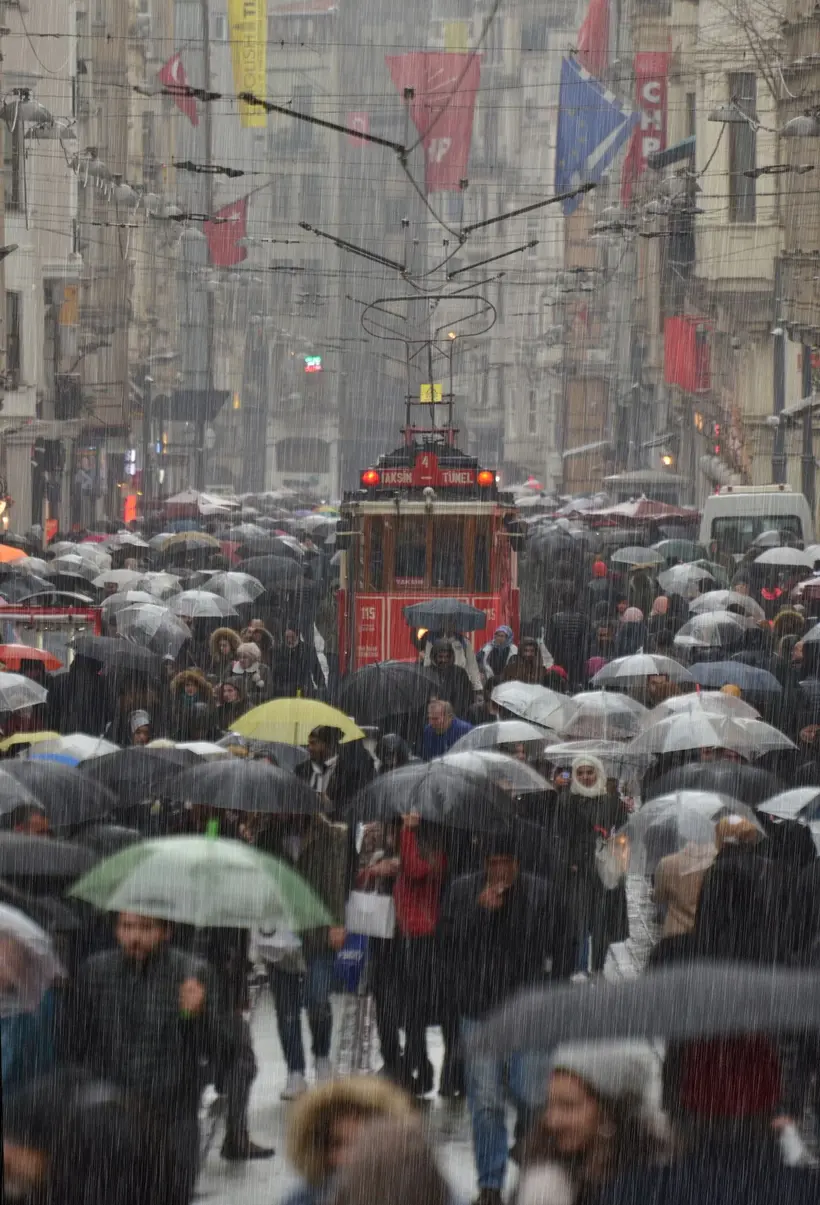
Pedestrians with umbrellas beside a tram on a rainy Istanbul street. Rail lines kept running during the floods while roads jammed. File photo from 2018. Photo: Bozan Güzel / Pexels
Istanbul airport transfer: how to plan around the floods
Set off earlier than usual, avoid the evening rush, and use door-to-door transport with a driver who can work around flooded underpasses. Istanbul Airport is in Arnavutköy, roughly 40 km from Taksim, and the main routes there pass through Kağıthane, Eyüpsultan and Sarıyer, three of the worst-hit districts. While warnings are active, we suggest allowing at least an extra hour on top of your usual journey time.
Sabiha Gökçen is on the Asian side. That is where Beykoz recorded the heaviest rain, and Thursday's forecast also focused on the Asian side. If roads clog, the M4 metro from Kadıköy is a useful backup, and it ran extended hours on Wednesday. Taxis are hard to find in heavy rain, and the ban on two-wheelers has taken motorcycle couriers and moto-taxis off the roads.
If you have a transfer booked with Cool Travel Istanbul or another operator, send your flight number and any change straight away, so the driver can follow a diverted or delayed flight instead of waiting at the wrong terminal. Business travellers with fixed meeting times may find a chauffeured executive transport service easier than relying on ride-hailing in a storm. For flexible hours across the city, private car hire with a driver for 4 to 12 hours lets you change your route as conditions change.
Should you change tours and plans this week?
Put off anything on the water until the wind drops. AKOM's forecast of gusts up to 80 km/h is not the weather for a Bosphorus trip, so move private yacht and boat tours to later in your stay. Days centred on covered sights are the safer choice: Hagia Sophia, Topkapı Palace and the Grand Bazaar keep you mostly indoors. Going between them by car rather than on foot through flooded streets makes a private guided historical Istanbul tour practical even in poor weather. Day trips east to Sapanca or Bursa can wait: schools were also closed in Sakarya, Kocaeli and Yalova as the rain moved across the Marmara region.
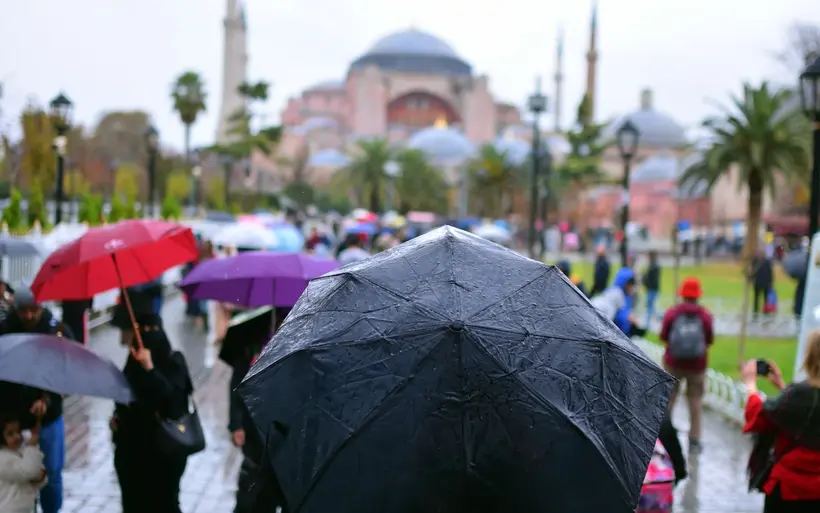
Visitors with umbrellas at Hagia Sophia on a rainy day. Covered sights such as Hagia Sophia, Topkapı Palace and the Grand Bazaar are the safer bet in bad weather. File photo from 2018. Photo: Abdulmomen Bsruki / Pexels
Frequently asked questions
Is it safe to travel to Istanbul right now?
Much of the city is working, and both airports were operating on Thursday morning, though with possible delays. However, weather warnings remain in force and officials are asking people to avoid journeys that are not essential. If you are already in Istanbul, stay away from flooded streets and underpasses and follow official updates before heading out.
How many people died in the Istanbul floods?
The governor's office reported three deaths on Thursday, October 15: a teenager electrocuted in Balat, a man who fell in Sarıyer, and a man found in Kağıthane. Four people were reported missing, so the figures may change.
Were flights cancelled at Istanbul Airport?
Some were. The governor said 51 flights were diverted and 19 cancelled at IST, while Sabiha Gökçen paused departures between 21:42 and 22:02 on Wednesday. Check your airline before travelling to the airport.
Are schools and attractions closed?
Schools are closed on October 15 and 16. No city-wide order has closed shopping malls, and we have not seen a general closure of tourist sights, but check individual venues before you go.
How long will the rain last?
Governor Davut Gül said on Thursday that rain could continue for another two to three days. Follow the Turkish State Meteorological Service (MGM) for updated warnings.
What should I do if my airport transfer is affected?
Contact your transfer company with your flight number and new arrival time, allow extra time for the journey, and keep your phone charged so the driver can reach you if roads are diverted.
Stay updated
Conditions are changing hour by hour. Before you travel, check the Istanbul Governor's Office, the municipality's AKOM disaster centre, the Turkish State Meteorological Service (MGM) and the İBB traffic map, along with your airline and airport. Cool Travel Istanbul will keep travellers informed, but official weather and traffic updates should always come first.
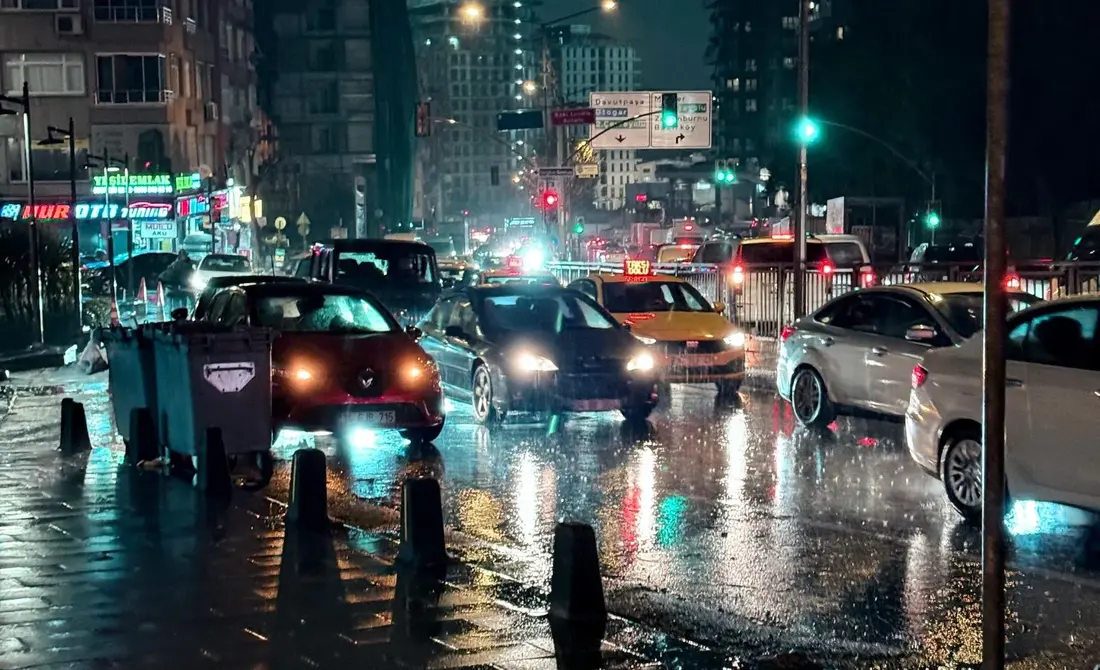
Cover image: night traffic on a rain-soaked Istanbul street. File photo, not taken during the floods. Photo: Erkan Özen / Pexels.